
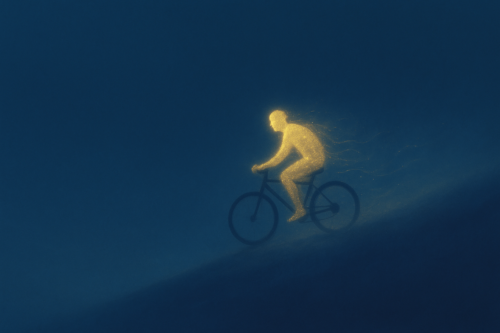
Do you crave freedom, yet find yourself avoiding difficult emotions, discomfort in the body, or resistance in the mind?
Keeping busy through work and other activities, overeating, smoking, scrolling endlessly on social media, chasing the highs and lows of love, constantly socializing — just anything so you don’t have to face yourself?
Or swinging to the other extreme — trying to meet and accept everything in you at once, only to get overwhelmed and too scared to try again?
This is the loop many practitioners get stuck in:
either escaping what they feel, or diving in too fast and overwhelming their nervous system.
The key to resolving this dilemma is learning the art of opening — how to meet and befriend difficult emotions, bodily discomfort, and mental resistance in a way that is attuned to the capacity of your nervous system.
Until you learn this skill, your life remains a pendulum between suppression and overwhelm.
The way out is the middle way — opening not too fast, not too slow.
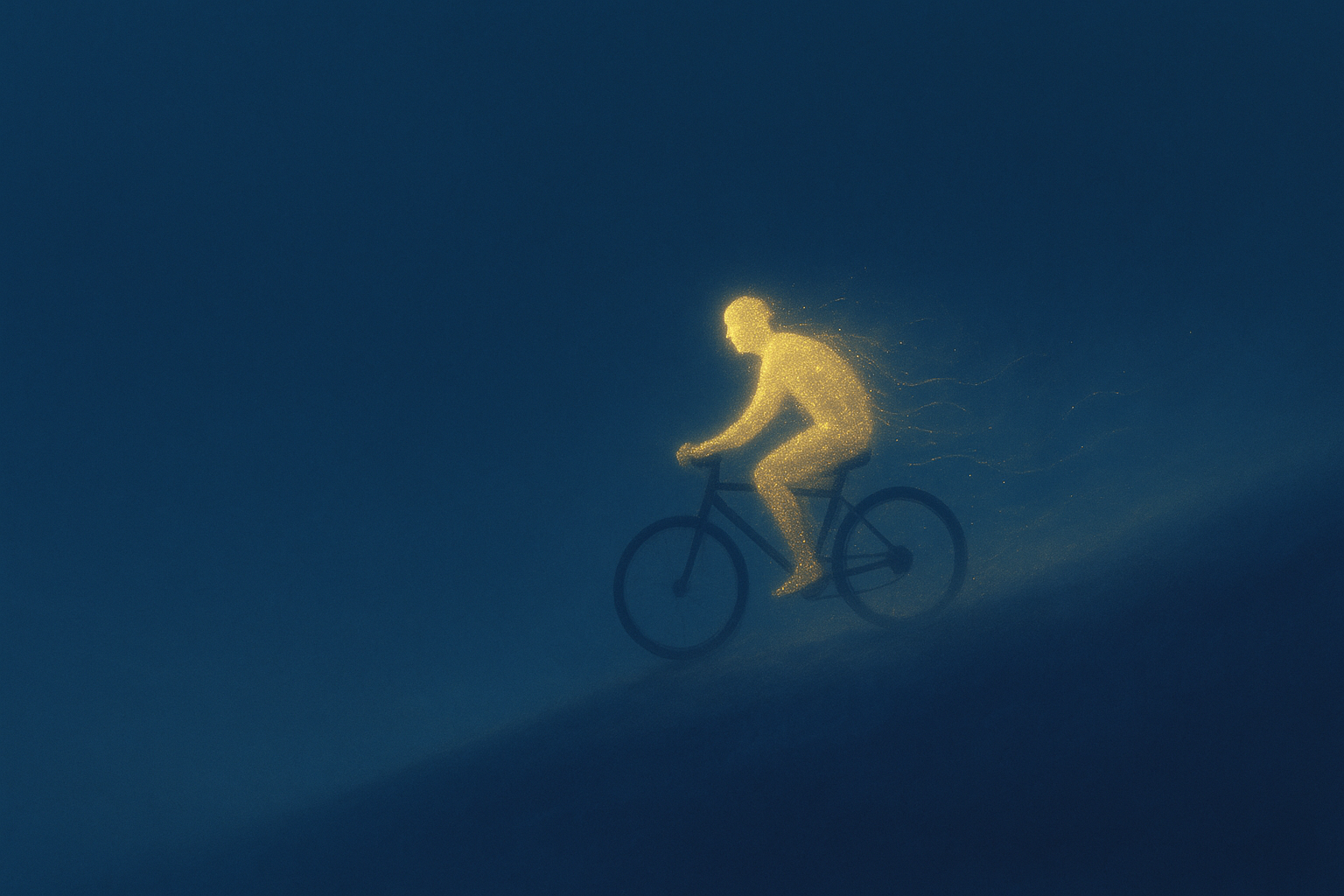
🚴♂️ The Bicycle on the Hill — A New Way to See It
🧊 The Brake and the Frozen State
Imagine you’re on a bicycle at the top of a steep hill. The natural movement is for the bike to roll down — for feelings and energy to flow through your body.
But you’re clamping down the brake, keeping the bike stuck in place. Your nervous system is pressing the brakes, holding the emotions and energy trapped in one place instead of letting them flow. You can feel it in the body as tightening, tensing, and contraction — the shoulders lifting and stiffening, the gut clenching, the chest tightening, the breath becoming shallow.
This same braking shows up as emotional flatness, anxiety, fatigue, or the restless urge to distract yourself with work, food, substances, people, screens — just anything to avoid rolling forward into what you feel.
Staying in this frozen state feels safer than letting go of the brake. But as long as you remain at the top of the hill — in comfort and control — the still lake of inner peace and the waterfall of aliveness — joy, love, and inspiration — will remain out of reach.
Yet peace and aliveness are not waiting at the bottom of the hill as something to be attained.
The very stillness and aliveness you long for — the still lake of inner peace and the waterfall of joy, love, and inspiration — are revealed within the flow itself, as you allow energy and feeling to move through you. The more you trust the natural movement of life, the more these qualities arise on their own — stillness at the center of movement, aliveness within stillness.
⚡ The Flood and the Emergency Brake
Moved by the longing for freedom, you break out of comfort and release the brake all at once. The bike goes from stuck in place to full speed in an instant. The speed terrifies you. Reflexively, you slam the brake again — hard — and fall off the bike, hurting yourself.
This is what happens when you try to open to all your feelings and bodily discomfort at once by releasing all resistance, tension, and defense too quickly. The nervous system rebels, creating a violent contraction to prevent the feeling from flooding you. This contraction is like an emergency brake — a last line of defense clamping down hard to keep you safe.
🌿 The Middle Way — Learning to Release Gently
The key is to release the brake little by little — facing your fear and gently moving beyond your comfort zone at the top of the hill (where you avoid discomfort, difficult feelings, and inner resistance), but not going so far beyond your comfort zone that you trigger panic and activate the emergency brake again.
As you let up the brake a little, you start to roll down the hill slowly. You begin to feel more comfortable at that pace. Then you can let up the brake a little more… and a little more… and a little more. Step by step, you expand your comfort zone until, eventually, you’re rolling full speed — no brakes, no fear.
Translated to meditation, this means the energy in your body flows naturally — feelings and subtle sensations moving as they’re meant to, without being blocked by resistance and tension.
💨 Flow, Aliveness, and Joy
As the bike speeds down the hill, you feel the rush of the wind, the exhilaration, the world streaming past. You’re completely immersed in the moment where there is no past, no future — only the bliss of pure, intense flow. You are fully alive.
In meditation, this shows up as the bliss of openness — pīti (joy) spreading throughout your body, and prāṇa (life force) vibrating through every cell, filling you with aliveness.
🌱 How This Principle Appears in the Four Core Movements of Meditation
This same rhythm — opening not too fast, not too slow — runs through every movement of meditation:
- 🕊️ Letting Go → Relaxing into awareness without forcing. Let ease and relaxation emerge at their own pace rather than striving or rushing.
- 🎯 Focus → Directing attention toward feelings and contractions with steady, kind awareness, instead of concentrating so hard that you create stress or tension.
- 🔍 Investigating → Bringing gentle curiosity to what you feel, asking questions such as:
“What does this emotion truly feel like?”
“What is hiding under this contraction or tightness?”
“Is it possible for me to relax just 5% more?” - 💥 Somatic Release → Feeling into contractions and emotions, allowing resistance and tension to dissolve naturally — not by forcing or chasing release, but by trusting the body’s own intelligence.
The principle of opening runs through every meditation practice: learning how to open gently, wisely, and allowing the system’s natural intelligence to do its work — without you getting in the way.
When you practice in this way, you discover that opening isn’t something you achieve — it’s what naturally happens when resistance softens. Stillness and aliveness are no longer something to chase, but inherent qualities of reality that emerge on their own. Life opens itself — once you get out of the way